

A lender can make homeownership look clean with one number.
You pay $2,200 in rent. A mortgage calculator says a similar home would cost $1,900. The comparison feels settled before you have seen the roof report, the insurance quote, the tax bill, or the basement after heavy rain.
Many buyers stop there. They compare rent to the mortgage and call the smaller number the smarter choice.
That mistake gets expensive.
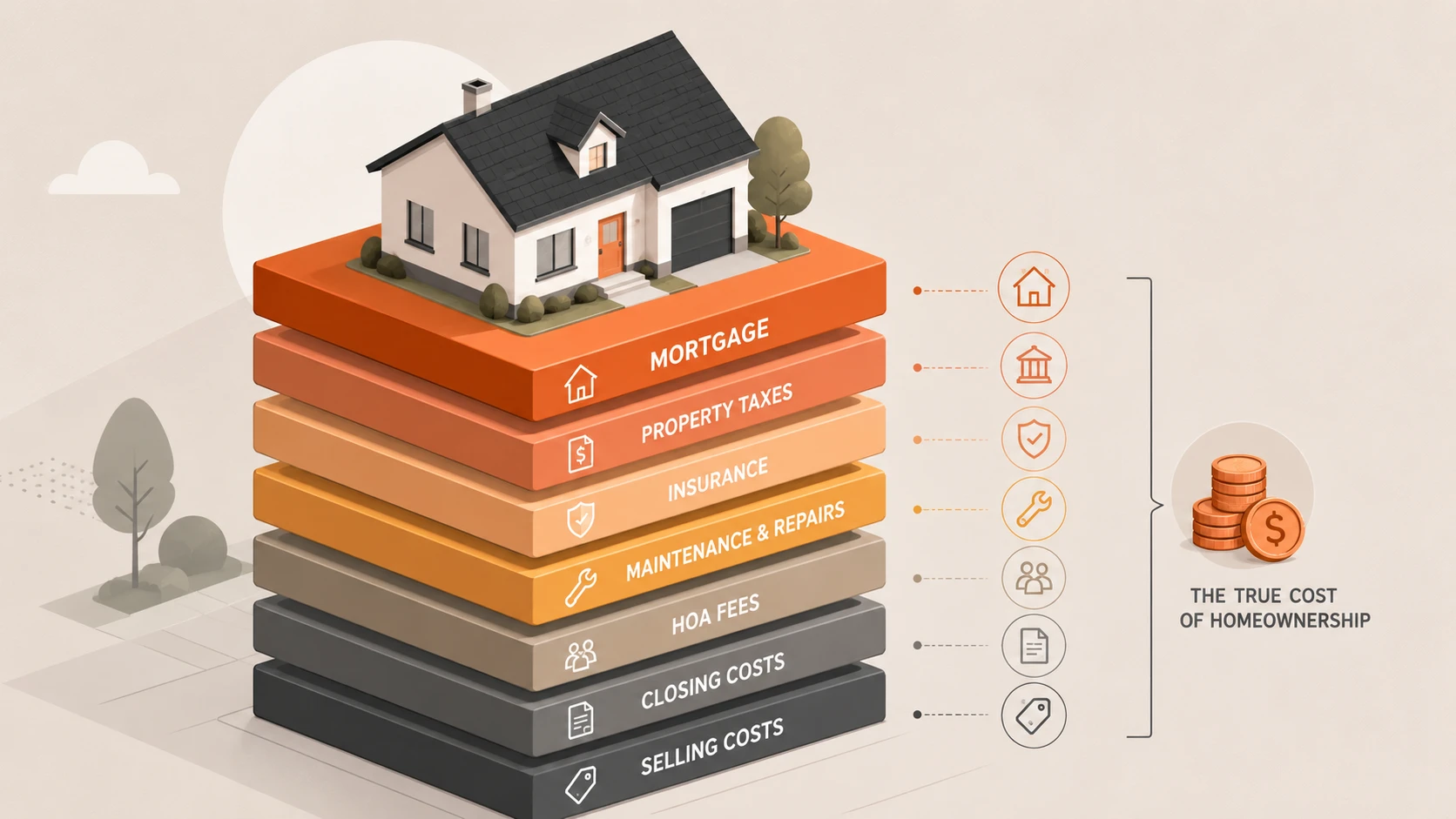
A mortgage payment covers one slice of ownership. You still pay property taxes, homeowners insurance, HOA dues, repairs, maintenance, closing costs, upgrades, and selling costs when you leave. Some bills come on a schedule. Others come because the furnace quits during a cold week or a contractor finds water behind a wall.
Rent feels wasteful because you see the payment leave your account and build no equity. Ownership hides its waste in different places. You pay interest. You pay taxes. You pay insurance. You pay to replace things that used to work.
In the first years of a mortgage, the lender takes more of your payment as interest than many buyers expect. Your equity grows, but it can grow slower than the payment makes you feel.
A rent check buys time and shelter. A mortgage buys shelter, risk, and a long list of future bills.
The better decision depends on your market, your timeline, your cash, and the life you expect to live over the next decade.
Start with the life you expect to live
Buying punishes short timelines.
You pay to buy the home. You pay to furnish it. You pay inspectors, lenders, title companies, movers, contractors, and sometimes an HOA before you have spent one night there. Then you pay again when you sell.
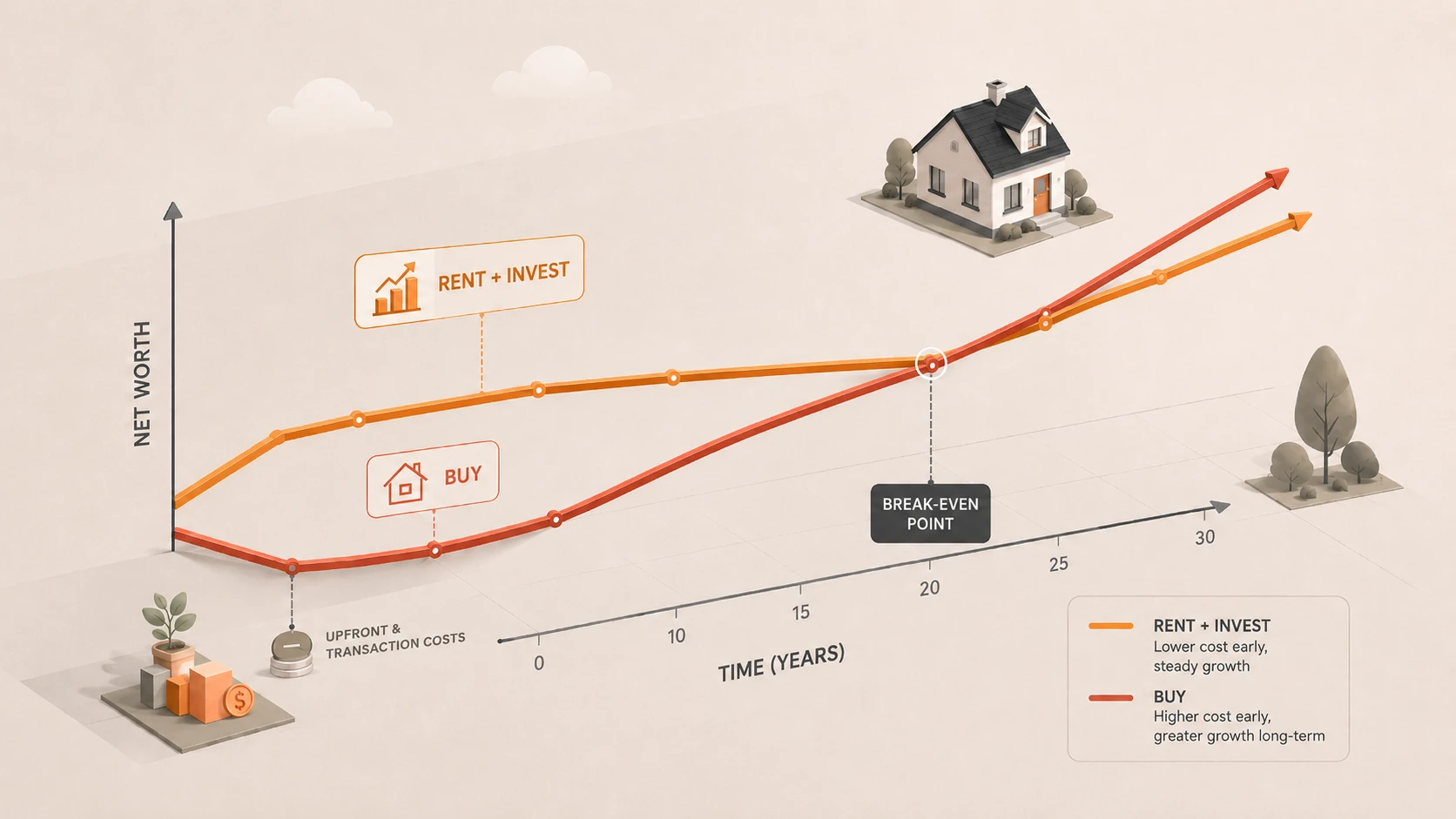
Those edge costs can eat years of principal repayment.
A five-year horizon deserves caution. Five to seven years sits in the messy middle. Ten years gives buying more room to work because you have time to absorb transaction costs, pay down principal, and ride through a weak selling market.
Your life matters as much as the spreadsheet.
You may change jobs. You may move for a partner. You may need another bedroom. You may decide the city no longer fits. You may want school stability. You may want the freedom to leave without finding a buyer during a bad market.
Flexibility has value. Put a number on it, even if the number feels rough. A cheaper payment can become expensive if you have to sell two years later.
Use local prices before broad rules
Housing markets do not care about national averages.
A city where a $600,000 home rents for $2,500 a month gives you one answer. A city where that same home rents for $4,200 gives you another.
Same buyer. Same income. Different math.
Use the price-to-rent ratio for a first read.
A $600,000 home that rents for $2,500 a month has a ratio of 20.
The ratio does not answer the whole question. Taxes, rates, insurance, maintenance, and appreciation can change the result. Still, the ratio catches the common mistake of comparing rent to a mortgage payment and ignoring the rest.
Some cities price homes like investment trophies and rentals like shelter. Other cities push rents high enough that owning starts to make sense. You need the ratio for your neighborhood, not a national talking point.
Count the costs buyers prefer to forget
A useful ownership estimate includes the costs that make the house feel less affordable.
You need mortgage principal and interest, property taxes, homeowners insurance, HOA fees, maintenance, repairs, closing costs, selling costs, and the cash you lock into the down payment.
Maintenance deserves more respect than buyers give it.
Many buyers use 1% of home value per year as a starting reserve. Treat that number as a first pass, not a promise.
A $500,000 home with a 1% reserve needs $5,000 a year before any major surprise. At 2%, you set aside $10,000. At 3%, you set aside $15,000.
Older homes, harsh weather, old roofs, aging plumbing, pools, large yards, and deferred care can push the number up. A home inspection can lower the chance of a bad surprise, but it cannot stop the house from aging.
Quiet years do not make ownership cheaper. They give the next bill more time to arrive.
Put the down payment in both stories
The down payment belongs in the comparison. Many buyers treat it like a hurdle they clear on the way to the house. It is capital.
Put $100,000 into a home and you gain equity. You also lose access to that money. Home equity can help later, but it does not behave like cash or a brokerage account. You cannot sell one bedroom during a layoff. You cannot sell a hallway to pay a medical bill.
In the renting case, that same money can stay invested. Renting does not win from that fact alone. The model needs to compare two uses of the same capital.
Rent-and-invest works on paper when you invest the difference. If renting saves you $700 a month and you spend it, the model describes a person you are not.
Be direct about your behavior. A useful model should reflect what you will do with the extra cash, not what a perfect household would do.
Treat tax benefits with suspicion until you can use them
Real estate tax benefits help some buyers. They disappoint others.
Mortgage interest deductions matter when you itemize and the deduction beats the standard alternative in your tax system. Property tax treatment depends on where you live. Some places tax homes with restraint. Others turn property taxes into a major cost.
Do not buy a home because someone at dinner said the interest is deductible.
Ask the practical questions. Will you itemize? Will the deduction exceed the standard option? Will local property taxes rise after purchase? Will your jurisdiction reassess the home at the sale price? Will insurance costs change because of floods, fires, storms, or local risk?
A tax benefit you cannot use has a value of zero. Leave it out of the model until you know it applies to you.
Build the two paths
You do not need a perfect forecast. You need a fair comparison.
Pick a time horizon: five, ten, fifteen, or twenty years. Then model buying and renting over the same period.
For the buying case, include the down payment, closing costs, mortgage payments, taxes, insurance, HOA fees, maintenance reserves, expected repairs, and selling costs. At the end, estimate the home’s value, subtract the remaining loan balance, and subtract the cost to sell. That gives you after-sale equity.
For the renting case, start with the same cash you would have used for the down payment and closing costs. Assume that money stays invested. Then model rent, rent increases, and the difference between renting and owning. If renting costs less, invest the difference. If renting costs more, subtract the difference from the investment balance.
Then compare the investment balance with the after-sale equity from owning.
That comparison matters more than rent versus mortgage. Payment comparisons give you a headline. Ending net worth gives you the decision.
Check year 5, year 10, year 15, and year 20. A purchase can look weak at year 5 and strong at year 15. A purchase that only works after year 20 may not fit your life.
Run the ugly version before you make an offer
A buyer who wants the house can make the numbers cooperate.
Use strong appreciation, low repairs, weak investment returns, high rent increases, and small selling costs, and buying will look great. The model will bless the purchase because you gave it friendly assumptions.
Run more than one version.
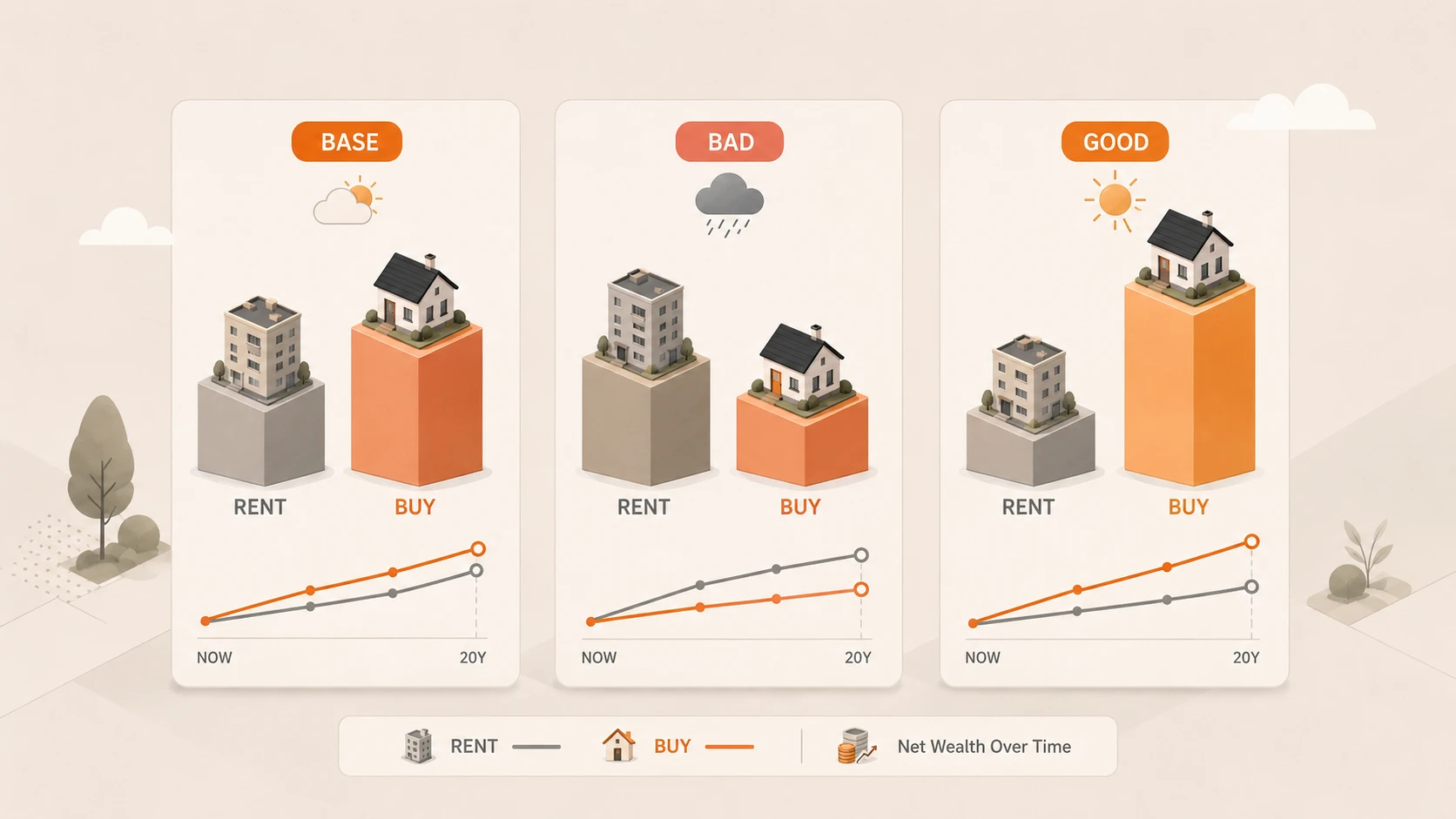
In the base case, use reasonable appreciation, reasonable investment returns, normal rent increases, and a maintenance reserve that fits the home’s age and condition.
In the bad case, lower appreciation, raise repairs, add a weak selling market, and test the damage from moving earlier than planned.
In the good case, give the home strong appreciation, stable costs, and a smooth sale.
Then study the pattern.
If buying wins in the base and bad cases, the numbers have strength. If buying needs the good case to work, you are making a leveraged bet on one asset in one neighborhood. You may still want that bet. You should name it before you sign.
A home can also win for reasons that do not fit in a spreadsheet. You may want stable schools. You may want a dog without landlord approval. You may want to renovate. You may want roots.
Those reasons count because life counts. Separate the financial reasons from the life reasons. Mixing them lets you pretend a preference is a calculation.
The decision
Buy when the numbers work, your timeline gives the house enough time to overcome transaction costs, and your savings can survive the ugly version of ownership.
Rent when the numbers feel stretched, your life may change, or the purchase depends on perfect appreciation and no major repairs.
Parents, brokers, friends, coworkers, and housing culture can make buying feel like a graduation ceremony. Ignore the ceremony. A house can build wealth. It can also trap cash, narrow your options, and turn every repair into your problem.
Renting gives you no equity. Owning gives you no guarantee.
Choose the path that leaves your balance sheet stronger and your future less fragile.
Before you buyHomeownership makes your emergency fund more important. Repairs do not wait for convenient timing. RelatedA house changes your asset allocation. Model it like the concentrated asset it is.